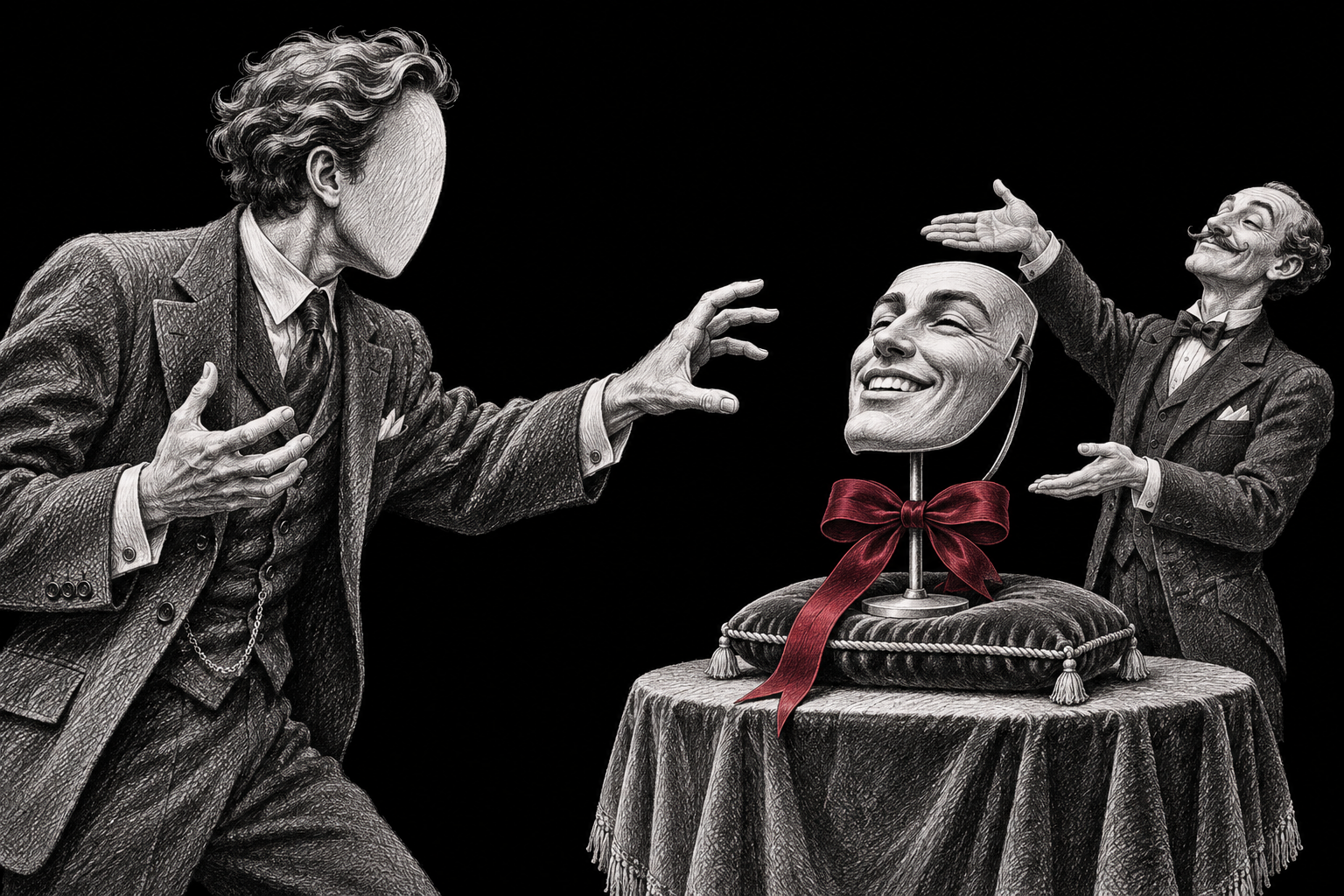
The trouble with an enterprising man is discovering that the two of you already have plans.
You haven't replied to his message. He's booked the weekend, divided the expenses and worked out why you should be grateful.
Your consent matters, of course. They just didn't want it holding up the project.
Something like this happened to LeBron James. Except his surprise commitment came with an advertising campaign.
On 4 November, the founder of Bron AI posted a promotional video featuring an AI-generated character resembling LeBron, wearing a jersey marked “Bron” and the number 23. The voice sounded familiar, too.
The actual LeBron had no involvement in the advertisement, his representatives said.[1]
What a saving on approvals. The actor doesn't run late. The agent doesn't negotiate. The celebrity doesn't ask awkward questions about reputation.
The perfect ambassador is someone who hasn't found out he's an ambassador.
No dressing room. No rider. No consent. Finally, a celebrity willing to work within a startup's budget.
Bron AI presents itself as a tool that brings together information and odds from sportsbooks and prediction markets to help people choose wagers.[1]
But the most interesting bet in its advertising was placed on someone who hadn't placed it.
His face. His familiarity. That tiny moment when a viewer thinks, “Oh, LeBron,” before asking the next question.
If there is a next question. Advertising isn't supposed to be a vigilance test. Although apparently that feature is rolling out.
Within less than a day, the post had attracted more than 900,000 views. James's representatives sent a cease-and-desist letter. Front Office Sports reported that the ad was removed from X after its story appeared. A representative for Luka Dončić, whose image also featured in the advertisement, said he had sent a demand too.[1][2]
Companies usually boast about the stars they work with.
This could become an impressive list of stars asking them to stop.
The website section marked “Trusted by” might need replacing with “Represented against us by.”
Still, two celebrity legal teams in one campaign. Some agencies would put that straight into the case study.
Then came the detail that makes this more than a story about a bad advertisement.
Adam Mendelsohn, James's longtime media adviser, suggested that provoking a legal demand might have been the point: a way of turning the advertisement into a news story.[2]
That is his interpretation of the company's motives. But consider the mechanism.
Use a famous person's face, and people hear about you.
Have the famous person demand that you stop, and everyone else hears about you.
Even the refusal comes with reach.
We're used to an arrangement in which a company pays a celebrity for access to an audience. Here is a much cheekier possibility: take the attention first, then find out what the conversation costs.
Imagine someone moving into your flat, charging for tours, and announcing, after you call the police: “Our venue has welcomed representatives of public institutions.”
There is certainly entrepreneurial spirit. I would simply prefer it interviewed under caution.
The imbalance is irritating. A convincing fake endorsement takes a short video. Explaining that it is fake takes statements, lawyers and another round of saying the product's name.
LeBron doesn't have to agree to the campaign to help spread the story about it.
He only has to object.
Once, you paid a celebrity to say your company's name. Now their lawyer can say it.
Not quite influencer marketing. More like influencer hostage negotiations, with a promising engagement rate.
The betting angle makes the whole thing particularly elegant.
You're invited to weigh probabilities and make informed decisions. Meanwhile, the familiar face attracting your attention needs its own fact-check.
Before examining the odds, perhaps establish whether the advertising contract exists.
We've learned to hesitate at “Mum, this is my new number.” Apparently the next household skill is looking at a celebrity advertisement and asking whether the celebrity has seen it.
Technology saves time. Some of that time must now be spent establishing what technology has just shown you.
The future is efficient. Please allow forty minutes for verification.
It would be easy to dismiss this as a rich athlete with expensive lawyers having another expensive argument.
But wealth makes LeBron unusually well equipped to object. He has someone to call. Publications will carry his denial. His real name is loud enough to compete with his artificial appearance.
Most people don't have that much infrastructure attached to their face.
I wonder what an ordinary morning will look like when convincing video impersonation becomes entirely unremarkable.
You open your phone. Apparently you're recommending something.
You look excellent. Sound confident. More energetic than you usually are before coffee.
Your digital self has already achieved more this morning than you have. Unfortunately, some of it may require an explanation.
Now you need to find out whom to contact to resign from the job you never accepted.
What catches my attention here is a very familiar habit: deciding for someone else, then making their refusal inconvenient.
Why are you making a fuss?
It's already finished.
People liked it.
We gave you publicity too.
Technology has supplied this behaviour with better resolution and convincing lip movements. The entitlement seems to have shipped fully functional.
He became the face of the company.
By the time he opened his mouth to object, another campaign had begun.