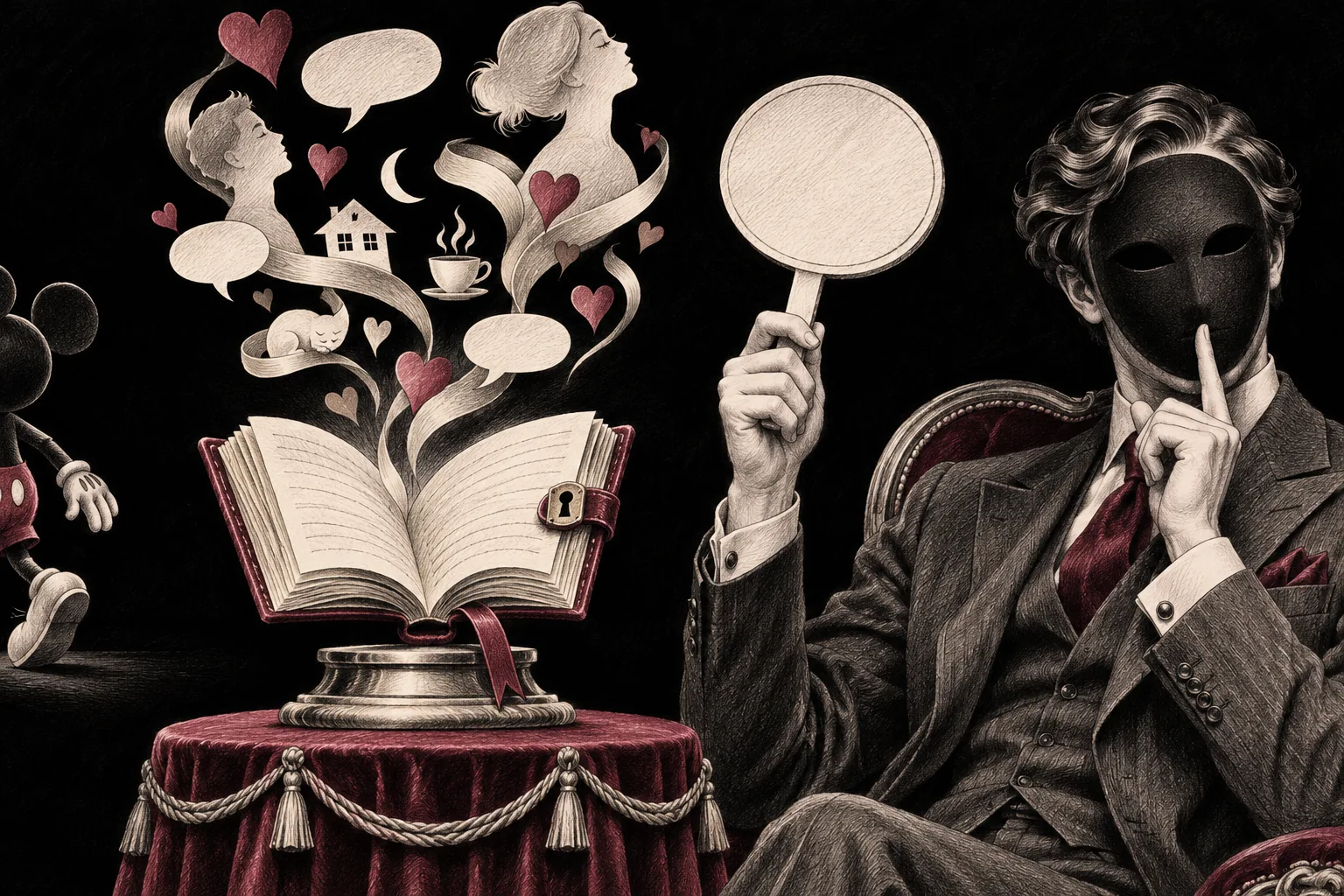
Remember when we asked how much Mickey Mouse would pay for “nudes”?
There’s a queue outside the changing room now.
Another bidder has appeared in the Character.AI sale. Disney is at least recognisable by the ears. This one’s distinguishing features are a New York venture capital fund and a preference for remaining unnamed.
Your confessions could move with the platform.
Its name is being nominated for a place behind the curtain.
Don’t confuse curiosity with a right to information. You’re on the other side of this transaction.
In our first story, Disney offered $20 million for a licence to specified Character.AI technology. Another bidder, Smirks and Pangs Acquisition, is offering $10 million plus specified liabilities for the platform and other assets. These are different packages, not two bids for the same conversations.[1]
But the second proposal includes user chats, according to PPC Land. And it is the identity of the fund financing that buyer which Character Technologies has asked the court to keep out of public view. The motion was filed on 19 November.[2]
So the plot is moving along.
First, we looked at who wanted the technology people had trusted with their most private thoughts.
Now, who might acquire the platform containing those conversations.
Apparently you can bare your soul to a character. Who inherits the wardrobe is a separate corporate matter.
Character.AI announced its bankruptcy in October. The company explained that a suitable bid could keep the platform operating; without one, the service would wind down.[3]
For the user, this is a story about a familiar companion.
For the sale process, it’s about assets that need a new owner.
Two very different descriptions of the same “Continue conversation” button.
Why not name the fund?
According to PPC Land’s account of the motion, disclosure could reveal its investment strategy and discourage the buyer from participating.[2]
A remarkably familiar need.
Not wanting strangers to know your interests. Worrying about the consequences of disclosure. Wanting to choose what you reveal, and to whom.
Users of a service like this might understand.
At last, the fund and the people whose conversations are part of the deal have something in common. The fund just brought lawyers.
The secrecy is not absolute.
Bankruptcy Observer reports that the company has already identified the sponsor confidentially to representatives of the bankruptcy watchdog, the creditors’ committee and a group of states. The dispute concerns public disclosure.[4]
This isn’t a suitcase of money left outside the courthouse by someone in a cloak.
It’s another model of trust: the people who need to know, know.
Are you one of the people who need to know?
You were only talking.
Smirks and Pangs was formed on 13 November and designated the opening bidder the following day. It is not yet the winner, and this is not a completed sale: others can offer better terms.[1]
One day old.
At that age, an ordinary human cannot support its own head.
A legal entity can already support a ten-million-dollar offer.
Creating a company to acquire assets is not evidence of wrongdoing. But its short biography makes “who’s behind it?” a reasonable question.
Especially when it hopes to acquire a service whose users have supplied considerably longer biographies.
Even the buyer’s name refers to users. According to ElevenFlo’s account of the filing, “smirk” and “pang” frequently appeared in the models’ responses.[1]
How thoughtful.
The buyer found time to learn your characters’ verbal habits. A full introduction is proving more difficult.
The intimacy branding is ready. Transparency is still with legal.
Curious bloggers aren’t the only ones asking questions.
The U.S. Trustee, which oversees the bankruptcy process, objected to the buyer’s designation and proposed bid protections. Bankruptcy Observer reports that the rules required the sponsor of a newly formed buyer to be named. The watchdog argues that the missing information impairs the ability to assess the transaction and object in time.[4]
The company is asking permission to keep the information confidential. Alternatively, it asks to remove the requirement to name the sponsor.[4]
If your answer doesn’t fit the questionnaire, try editing the questionnaire.
A feature I would appreciate on a mortgage application.
The easy line here would be: “A secret billionaire is already reading your confessions.”
But we don’t know that. An offer to acquire assets does not establish that a particular person is opening particular chats. Nor do we know the final winner or the service’s future operating terms.
The uncomfortable question comes earlier:
Why should a user regard the possible transfer of their conversations as an ordinary part of business, while the investor’s public identity is treated as a potential threat to business?
Contracts have categories, exceptions and procedures.
The person at the screen has a shorter question: who gets this?
In its October announcement, Character.AI reminded users that they could export their data or delete their accounts, and said its privacy protections remained in place.[3]
But an export button doesn’t answer every question.
It lets you take a copy of the conversation. It doesn’t let you choose the service’s next owner.
And it doesn’t explain whether a familiar character will remain the same after changes to the company, model or business plan.
A digital companion needn’t be “killed” to stop being the one someone grew accustomed to. Changes to responses, memory or available features can already alter that experience. That is a possible consequence of service changes, not an announced plan by this bidder.
For the company, these are assets.
For the user, a place they kept returning to.
As of 21 November, the confidentiality request has not been decided. The company has proposed that it be heard on 23 November.[1][2]
Perhaps the name will be disclosed. Perhaps the court will agree with the company. Perhaps another buyer will win.
But the central scene has already happened.
At least Mickey arrived with a recognisable face.
The next bidder wants us to respect its privacy.
An entirely understandable desire. Especially to the people whose personal conversations could move with the platform.
Someone else wants your “nudes”.
But don’t ask awkward questions. They’re not ready to open up.